


Jiminy Peak Ski: Conditions, Trails & Night Skiing
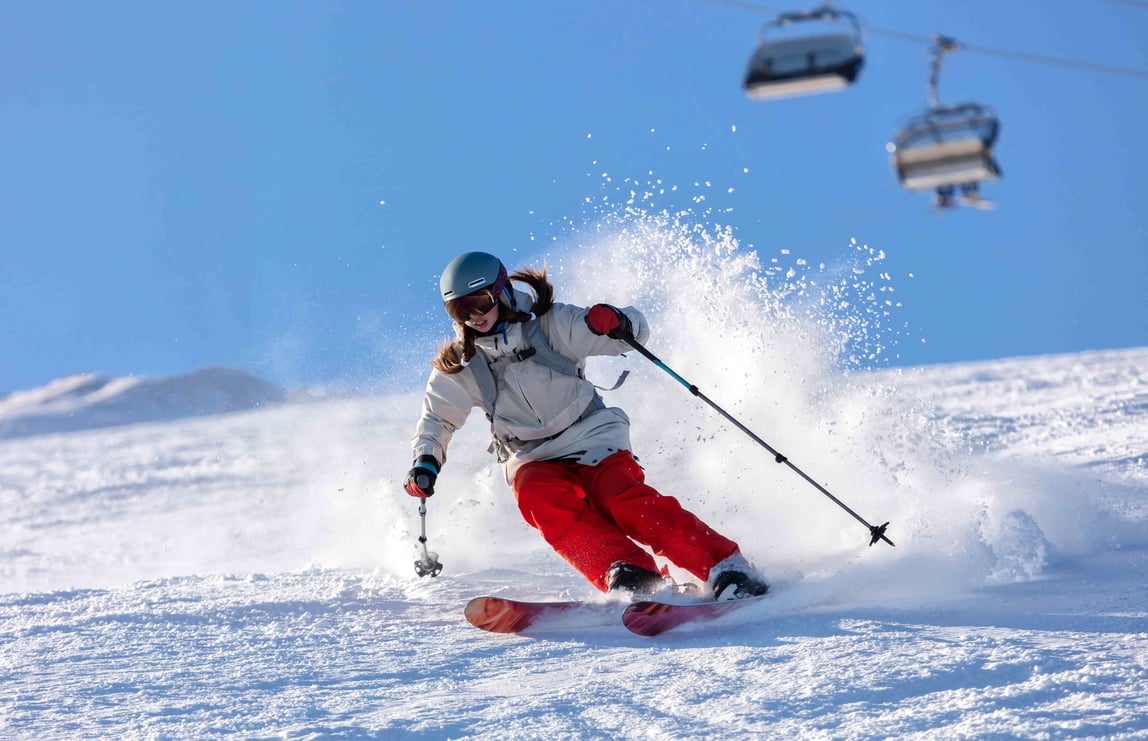
Jiminy Peak is the biggest ski mountain in the Berkshires, twenty-eight minutes north of us in Hancock, and the honest reason to ski it is not the vertical. It is that the snow is almost always there.
Plenty of New England mountains spend January waiting for weather. Jiminy Peak built its way out of that problem, and if you understand how, you can plan a ski day here with far more confidence than the forecast alone would give you.
Jiminy Peak skiing, by the numbers
Over 45 trails across roughly 167 acres, with a summit at 2,380 feet and a vertical drop of 1,150 feet. The longest run goes about two miles. Terrain splits out to roughly 38 percent beginner, 29 percent intermediate, 27 percent advanced, and 7 percent expert, plus three terrain parks.
The layout matters more than any of those figures. Every trail funnels back to the base area, so a family can split up by ability all morning and still keep meeting at the bottom. If you have ever spent a day at a sprawling mountain trying to locate a twelve-year-old, you will appreciate what that is worth.
The snowmaking is the actual story
Jiminy Peak's snow guns are called Sledgehammers, made by SnowGun Technologies and patented out of a collaboration between Brian Fairbank, chairman of the Fairbank Group, and Pentti Nikkanen, a former Skunkworks engineer. Since they went in, the mountain has cut its energy use for snowmaking while roughly doubling its snow output.
The practical result is 96 percent snowmaking coverage with an average of about three feet of snow underfoot. Natural snowfall here averages around 71 inches a season, which is not a lot by northern New England standards, and that is precisely the point: the mountain is not relying on it.
The resort also generates a meaningful share of its own power from an on-site wind turbine, which is unusual enough among ski areas to be worth knowing, and consistent with how the place is run.
Jiminy Peak conditions: how to check before you drive
Look at the conditions report the night before and again the morning of, and read two things rather than one. The snowfall number tells you what the sky delivered. The open-trails and open-lifts count tells you what you can actually ski, and at a mountain with this much snowmaking those two numbers come apart often.
A week with no new snow can still mean nearly everything open. It is the reverse of the instinct most skiers have, and it means a dry January here is a far better bet than a dry January somewhere that depends on the weather.
Night skiing at Jiminy Peak
This is the mountain's other distinguishing feature and one of the largest lit trail networks in New England. More than twenty trails run under LED lighting until 10pm, which is enough terrain that night skiing here is a real session rather than a token loop or two.
It changes how you can plan a trip. You can arrive in the Berkshires on a Friday evening, ski from six to ten, and still have both weekend days. Or do something in Lenox during the day and ski after dinner. For anyone driving in from Boston, Hartford, Albany or New York, that Friday night session effectively adds a day to the weekend.
It is also the quietest good skiing of the week. The crowds thin out after the afternoon, and the surface is usually firmer and faster under lights.
When to go, and when to arrive
The season generally runs November through April, depending on the cold. Midweek and twilight hours are the best skiing of any given week, with shorter lift lines and better snow than a Saturday afternoon.
If you are coming on a weekend or a holiday, get there before 10:30am. After that the near lots fill and you are walking back from the overflow with skis on your shoulder, which is a poor start to a day. Early also means the first couple of hours before the mountain gets busy, which regulars will tell you is the best part.
One more piece of practical detail worth knowing: Jiminy sells four and eight hour passes that start when you buy them rather than at a fixed morning bell. If you would rather sleep in, eat a real breakfast and ski from eleven to seven, you can, and you are not paying for the hours you skipped.
How it compares for skiing in the Berkshires
Jiminy is the largest and the most resort-like of the Berkshire mountains: a village at the base, lodging on the hill, restaurants, rental and lesson operations built out for beginners. It has been recognised by Ski Magazine among the top mountains for family programs and it runs an accredited Burton Learn To Ride centre, with the KidsRule camps for children.
What that buys you is reliability and teaching. What it costs you is solitude, particularly on a holiday Saturday. The smaller mountains closer to Lenox are a shorter drive and a quieter day, with less terrain and less snowmaking behind them. If you have one ski day and you want it to work, Jiminy is the safer choice. If you are here for a week, mixing them is better than repeating either.
What to bring
- Layers you can shed. Snowmaking snow skis firmer and you work harder on it.
- Goggles rather than sunglasses for night skiing. The light is flat under LEDs.
- A card rather than cash for the hourly pass windows.
- Something warm for the drive home. Ten o'clock in the Berkshires in February is a serious cold.
Come stay
We are a family-owned hotel in Lenox, twenty-eight minutes from Jiminy Peak and central to the rest of the county, with fireplace rooms, an indoor pool open year-round, breakfast included and the Foxtrail Lounge for the end of a cold day. A hot breakfast before a ski morning and somewhere warm to come back to is most of what a ski trip needs.
Join the Foxtrail Insider for what is opening this winter, or book a room and plan the snow around it. Explore our rooms or check availability.
FAQ
How many trails does Jiminy Peak have?
More than 45 trails across about 167 acres, with a 1,150 foot vertical drop from a 2,380 foot summit. Roughly two thirds of the terrain is rated beginner or intermediate.
Does Jiminy Peak have night skiing?
Yes, and it is one of the largest lit networks in New England. More than twenty trails are lit until 10pm, so a night session covers real terrain rather than a single beginner slope.
How do I check Jiminy Peak conditions?
Use the resort's conditions report, and read the open trails and lifts count rather than only the snowfall number. With 96 percent snowmaking coverage, the mountain is often near fully open after a dry week.
When is the Jiminy Peak ski season?
Roughly November through April, depending on temperatures. Midweek and twilight sessions are the quietest and usually the best snow.
How far is Jiminy Peak from Lenox?
Twenty-eight minutes from us on Route 7 in Lenox. It is the longest of the Berkshire ski drives from here and worth treating as its own day rather than an afternoon add-on.